Marketing and sales
À lire aussi
The printing price is just the tip of the iceberg: 7 hidden costs that drive up the real bill for your business cards.
.png)
Marketplace, Waalaxy integration, offline AI scanner, badge folders, multilingual app... WEMET is opening up to your ecosystem this month. Discover all the new features and our tips for getting the most out of them.
Networking is the engine of B2B growth, but exchanging business cards is just the tip of the iceberg. Too often, the energy invested in an event falls back the next day, leaving promising opportunities to be lost in administrative nothingness.

How to turn a simple encounter into a lasting business relationship thanks to a Professional contact follow-up rigorous, based on modern technologies such as digital profiles and CRM integration.
Professional contact follow-up is not a simple administrative task. It is the main driver of your return on investment in events. An unsuccessful meeting is a major expense in time and money.
In an ultra-competitive B2B context, the responsiveness and relevance of your first post-meeting interactions determine the trajectory of the commercial relationship.
The memory of an interaction is quickly erased. According to the Ebbinghaus forgetting curve, we lose around 75% of new information after 48 hours. If you do not follow up immediately, your interlocutor will forget your value proposition and the emotional context of the meeting.
WEMET reveals that 70% of professional contacts are lost due to the lack of effective follow-up. This figure highlights a market reality: the majority of companies fail by failure in managing the post-meeting relationship.
A structured follow-up process makes it possible to:
Successful professional contact follow-up requires as much knowing what to do as what not to do. Many opportunities are lost through avoidable blunders. The most common mistake remains “radio silence” followed by a brutal request.
Here is a comparative analysis of common mistakes and best practices to adopt to optimize your conversion rates:
The aim is to maintain the momentum of the initial exchange. Sending a standard brochure to a contact who has expressed a specific need is counterproductive. Likewise, do not centralize data in a management tool inevitably leads to oversights. The quality of your relationship depends on the precision of your institutional memory. Avoid thinking of your leads as simple Excel lines. Treat each interaction as the start of a strategic partnership.
For professional contact follow-up to be effective, it must be systematized. Improvisation is the enemy of conversion. We recommend structuring your approach into three distinct phases: collecting, qualification and personalization. Each of these steps must be executed accurately to ensure that information flows smoothly to your sales teams.
The first flaw in the process is often data entry. Paper business cards get piled up or lost. Manual re-entry is time-consuming and a source of errors (mistakes in the email, wrong number), which can kill the opportunity before it even starts.
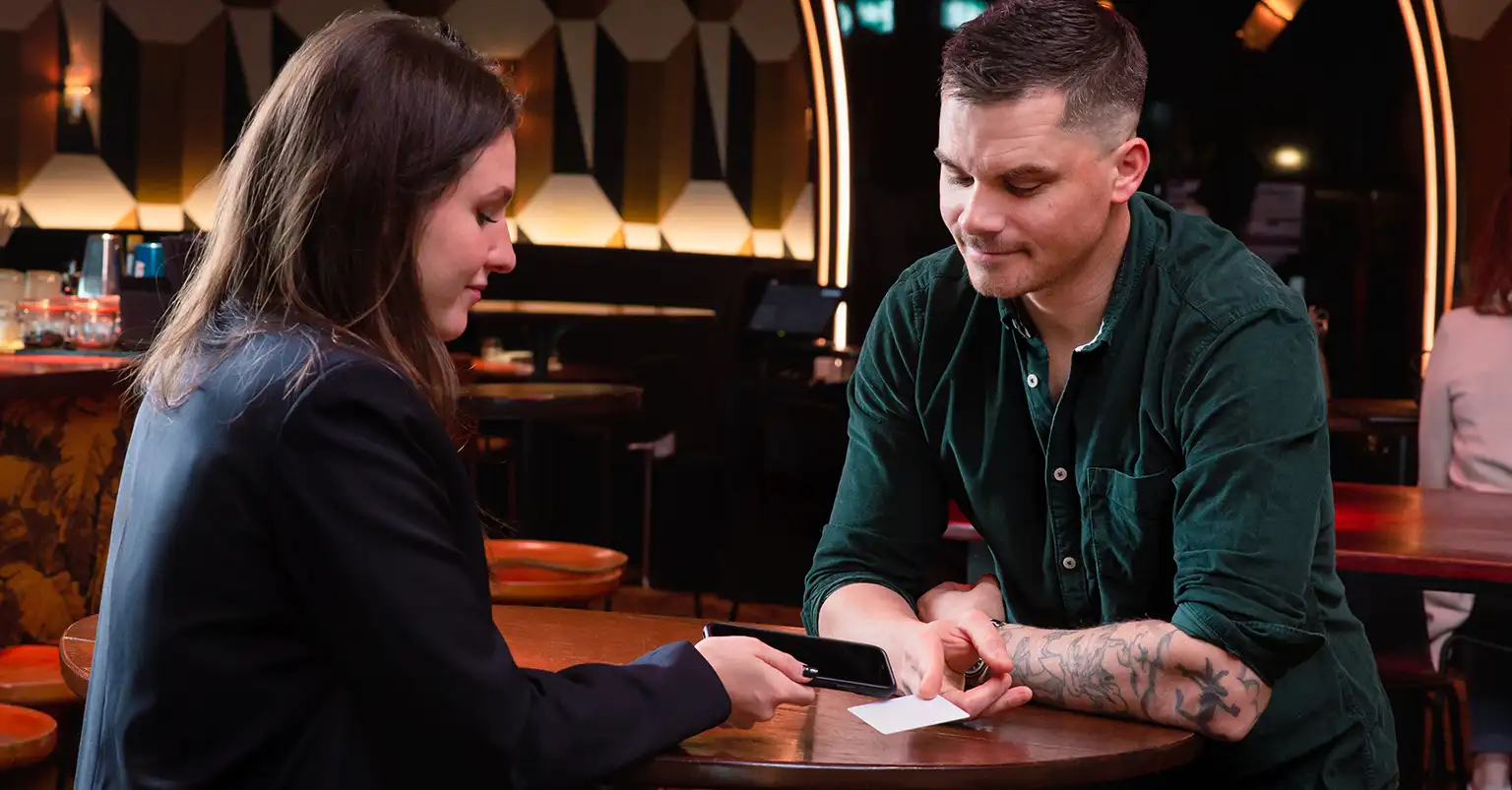
The use of digital tools is essential to make this stage reliable. WEMET lead capture simplifies this crucial step by allowing you to instantly scan a paper card or retrieve data via NFC technology. This technology ensures that 100% of the information (name, position, company, email, telephone) is recorded correctly. No need to wait for the return to the office: the collection is done in real time, thus securing your company's information assets.
Not all contacts are created equal. Once the information is collected, it is imperative to qualify it to allocate your resources where they have the most impact. Treating a key decision maker like a student represents a significant loss of efficiency.
Use methods like BANT (Budget, Authority, Authority, Need, Timing) to assess potential.
This segmentation allows you to adapt your strategy. A “hot” lead will be sent directly to sales representatives, while a “cold” lead will enter an automated marketing nurturing loop.
Personalization is the keystone of successful follow-up. It is not only a question of adding the first name, but of taking up the context elements discussed. This is where the connection between your collection tools and your CRM makes perfect sense.
With WEMET and the CRM connection, you can create workflows to give you reminders and tasks based on the leads collected.
For example, if you tagged a contact as “Interested in CSR,” the workflow can automatically schedule a task to send them your sustainability report 48 hours later, followed by an invitation. This intelligent automation ensures that no follow-up is forgotten and that each message resonates with the specific needs expressed by the prospect, drastically increasing response rates.
In the digital age, your business card should be a real connection hub. The digital profile acts as an extension of your professional presence, available 24 hours a day. It makes it possible to extend the experience of the physical encounter by offering immediate and structured access to your professional universe.
Unlike a paper card, the digital profile is dynamic. The WEMET digital profile turns every exchange into a trackable opportunity. When a prospect interacts with your profile (vCard download, website visit), these actions are recorded. This radically changes the nature of professional contact follow-up: you no longer navigate blindly, but you act on the basis of real behaviors. You offer a smooth and modern user experience, which immediately reinforces your brand image.
The digital profile serves as a natural gateway to your social networks, in particular LinkedIn. Integrating direct access buttons on your connected map encourages your contacts to add you instantly. This allows you to:
Use these channels to engage with the content of your prospects. A relevant “like” or comment can be more effective than relaunching by regular email to reactivate a discussion.
To move up a gear, the use of dedicated tools is essential. Your smartphone address book or an Excel file are no longer enough to manage large volumes of data. Adopting a coherent technology stack makes it possible to structure your business processes and to secure your pipeline.
The objective is to create an ecosystem where information flows without friction between making contact in the field and closing actions. This involves two major pillars: centralization through a CRM and acceleration through automation. These technologies free humans from tasks with low added value so that they can focus on relationship customer.
CRM is the brain behind your commercial strategy. It must be fed continuously and accurately. WEMET's native CRM integration allows you to automatically synchronize your new contacts to your database (Salesforce, HubSpot, Pipedrive, etc.).
This sync eliminates data silos. As soon as a contact is scanned, it appears in your CRM software with all fields filled in. This allows your teams to have a unified vision of the prospect. So you can:
Automation is the lever that allows you to maintain a high level of follow-up without spending your nights there. Once the contact is in the CRM, automated scenarios can take over.
Here are some concrete examples for Save time :
The objective is not to robotize the relationship, but to automate the administrative process to humanize the moment of real exchange.
Professional contact follow-up is much more than a post-event step. This is the foundation on which tomorrow's partnerships are built. Going from a simple meeting to a fruitful collaboration requires method, responsiveness and the right tools. By avoiding classic pitfalls and adopting a structured approach, from smart collection to CRM integration, you turn every handshake into a tangible opportunity.
At WEMET, we strongly believe that technology should serve people. Our solutions of connected cards and digital profiles are designed to facilitate these exchanges while respecting efficiency values. By removing technological friction, we allow professionals to focus on what matters most: the quality of the relationship.
Adopting these practices means choosing not to let 70% of your networking efforts evaporate, but to build a solid network that generates growth for your business.
WEMET est une worktech toulousaine qui vise à révolutionner les échanges professionnels. En 2020, son cofondateur Samuel Dassa part d’un constat :
les cartes de visite papiers ne sont pas pratiques et plus adaptées au monde du travail actuel.
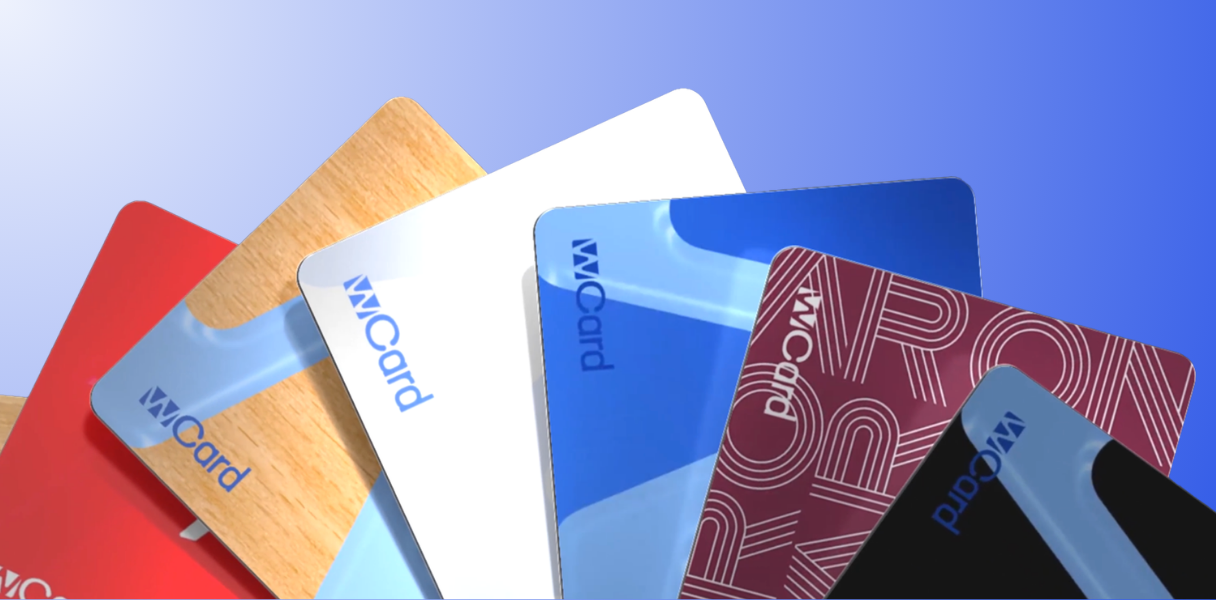
Ainsi, est née la carte de visite connectée : la WeCard. Grâce à la technologie NFC, que l’on retrouve dans le paiement sans contact par exemple, elle vous permet d’échanger un large panel d’informations. La valeur clé chez WEMET c’est l’expérience utilisateur. Il était donc important pour nous de faire évoluer notre produit en innovant au quotidien mais également de vous garantir un produit qui évolue avec et tout au long de vos projets professionnels.

Première société à proposer la carte de visite connectée sur le marché français, WEMET compte aujourd’hui plus de 20 000 entreprises équipées, 200 000 utilisateurs de WeCards et plus de 10 collaborateurs.