Marketing and sales
À lire aussi
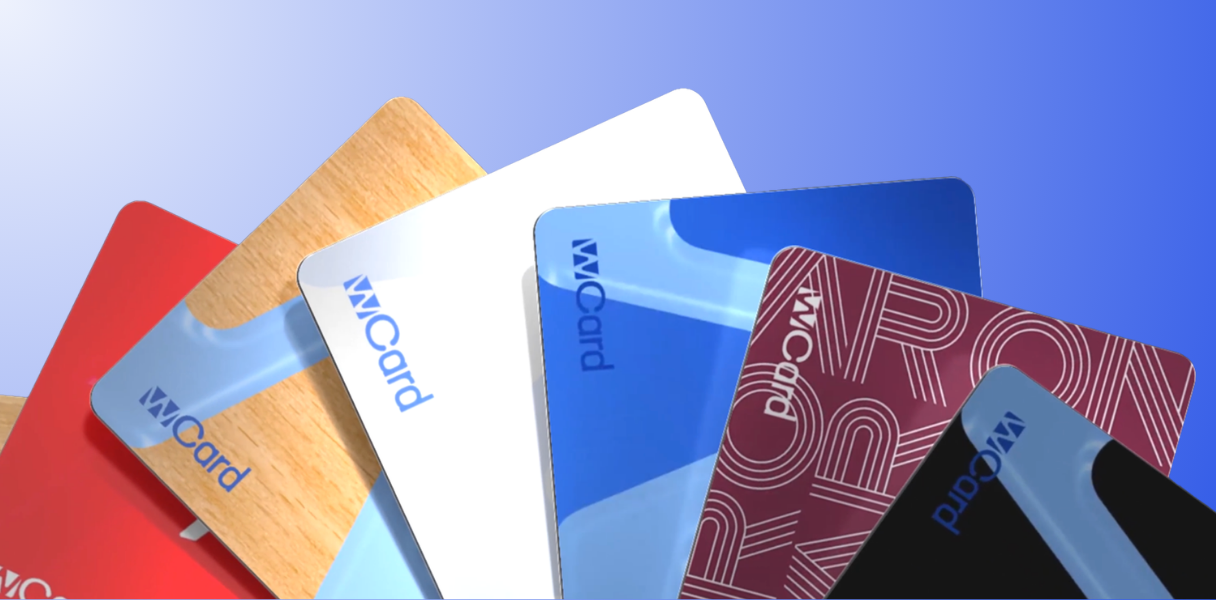
The printing price is just the tip of the iceberg: 7 hidden costs that drive up the real bill for your business cards.
.png)
Marketplace, Waalaxy integration, offline AI scanner, badge folders, multilingual app... WEMET is opening up to your ecosystem this month. Discover all the new features and our tips for getting the most out of them.
CRM has become an essential pillar of commercial performance. Centralization of contacts, monitoring of opportunities, management of activity... on paper, everything is there. However, in the reality on the ground, many sales teams make the same observation: a CRM alone is not enough to sell effectively.
In a context where responsiveness and personalization have become the absolute standards, choosing the right tools that are peripheral to your CRM (Customer Relationship Management) is a major strategic decision.
This article analyzes in depth the most efficient technical solutions to build an integrated sales stack, capable of transforming your sales processes and accelerating your growth.
CRM should no longer be seen as a simple database, but as the “Single Source of Truth” (SSOT) of your company.
In 2026, the centralization of customer information is the foundation on which any effective B2B growth strategy is based. One Modern CRM acts as your organization's central nervous system, orchestrating the interactions between marketing, sales, and customer service.
Market data confirms this centrality: companies using a properly configured and adopted CRM notice a average sales increase of 29% and an improvement in the productivity of sales teams by 34%.
The power of a CRM (whether it's Salesforce, HubSpot, Pipedrive, or Microsoft Dynamics) is intrinsically dependent on the quality of the data that feeds it. An isolated CRM, with no connection to salespeople's daily tools, quickly becomes an empty shell or, worse, a silo of obsolete data.
To optimize performance, CRM must structure the sales pipeline, automate administrative tasks with low added value and provide predictive analytics based on artificial intelligence. It makes it possible to move from intuitive management to data-driven management (data-driven), where each decision is supported by precise metrics such as customer acquisition cost (CAC), customer lifetime value (LTV) and conversion rates by stage of the funnel.
Technical integration between your peripheral tools and your CRM is the main lever for eliminating operational friction. A fragmented tech stack requires teams to navigate between multiple interfaces, increasing the risk of human error and wasting time. Connecting your sales tools creates a bidirectional and real-time data flow that is essential for sales velocity.
Data fragmentation remains the number one enemy of customer knowledge. When a salesperson has to consult their email box, phone, an Excel file and CRM to understand the history of a prospect, they lose precious efficiency. The integration makes it possible to consolidate all interactions (calls, emails, emails, appointments, signed documents) directly on the CRM contact sheet.
This centralization starts with the first physical or digital interaction. It is precisely to meet this need for immediate capture that we have developed our technology. Les WEMET NFC cards automatically capture lead data into the CRM during a meeting, eliminating manual entry and ensuring that 100% of leads encountered in the field integrate instantly your CRM (Salesforce, HubSpot, etc.) with reliable and structured information.
Administrative tasks still occupy nearly 60% of salespeople's time, to the detriment of active sales.
The integration of business tools aims to reverse this ratio. By connecting your telephony, your agenda or your prospecting tools to the CRM, you automate the feedback of information.
Productivity gains can be measured in concrete terms:
A smooth customer experience is based on the relevance and continuity of exchanges. A prospect should never have to repeat information already given to another person in the company. The integration of the tools ensures that each member of the team (SDR, Account Executive, Customer Success Manager) has the same level of contextual information.
This allows a hyper-personalization of exchanges. For example, if a customer consults a commercial proposal via an integrated tracking tool, the sales representative receives an alert and can contact them at the appropriate time. This reactivity, coupled with a perfect knowledge of the history, significantly increases satisfaction rates (CSAT) and retention rates (Net Revenue Retention), transforming customer relationships into a sustainable competitive advantage.
To build a successful business architecture in 2026, we recommend selecting “Best-in-Breed” tools (the best in their category) that offer native connectors or robust APIs with the main CRMs on the market. Here is our technical analysis of the essential solutions.
Modern prospecting requires surgically accurate data. Les business tools in this category must not only identify the right targets, but also enrich the contact sheets with contextual data (technographic, firmographic) even before the first call.
LinkedIn Sales Navigator remains the absolute reference for social selling, allowing granular targeting. The challenge lies in extracting and activating this data. Tools like Lusha or Kaspr allow you to reveal contact details (emails, phones) and push them to the CRM in one click.
In a “Phygital” approach (physical and digital), the management of leads encountered in person is often the weak link.
WEMET automatically enriches leads with complete digital profiles during exchanges. Unlike a paper card Inert, our technology allows, during the scan, to retrieve not only the contact details, but also the context of the meeting, and to synchronize this enriched information directly into the corresponding fields of your CRM (Salesforce, HubSpot, etc.).
The commitment covers telephony (VoIP) andcold emailing (Cold Emailing). The aim is to maximize the number of touchpoints while tracking each interaction.
For telephony, Aircall and Ringover dominate the French market. These cloud telephony solutions are deeply integrated with CRMs (CTI, Computer Telephony Integration).
For cold emailing, Lemlist and Woodpecker are critical to ensuring deliverability and personalization at scale. Unlike marketing tools (Mailchimp), these programs send “text-only” emails from your server, simulating a human approach to avoid spam filters. CRM integration makes it possible to automatically stop a sequence if the prospect answers or makes an appointment.
Friction when making appointments is a major cause of lost leads. Back-and-forth emails to find a niche should be eliminated.
Calendly is the market standard, but solutions like Chili Piper go further for advanced sales teams. Chili Piper offers “Concierge Scheduling”: when a prospect fills out a form on your site, the tool qualifies the lead in real time and, if it matches the criteria, immediately suggests a slot in the appropriate sales representative's agenda (based on “Round Robin” or territory rules).
CRM integration ensures that:
Sometimes, native integrations aren't enough for complex business processes. iPaaS (Integration Platform as a Service) automation platforms then become the glue of your stack.
Zapier and Make (formerly Integromat) are the leaders. They allow you to create scenarios (Zaps or Scenarios) triggered by events.
Workflow example: When a prospect scans a WEMET card (Trigger), then create or update the contact in HubSpot (Action 1), automatically assign the lead to the sales representative who owns the card (Action 2) and create a follow-up task within 48 hours in the CRM (Action 3).
Make is particularly popular for its ability to manage complex logic, conditional connections, and data transformations (JSON, XML) before being sent to the CRM.
The closing phase should not suffer from any administrative slowdown. The electronic signature is now an essential legal convenience (eIDAS regulation in Europe).
Yousign, DocuSign and PandaDoc are the most robust tools.
While CRMs have reporting modules, specialized tools make it possible to go further in Business Intelligence (BI) and sales forecasting.
Table (Salesforce) and Microsoft Power BI allow CRM data to be cross-referenced with other sources (ERP, Google Analytics) for a holistic view.
For pure sales teams, tools like Clari or Gong.io (Revenue Intelligence) analyze interactions (emails, calls) using AI to predict with more than 90% accuracy whether a deal will be signed or not, alerting managers to risky opportunities.
The abundance of software available can lead to “technological fatigue.” To avoid piling up unnecessary subscriptions (SaaS sprawl), a rigorous selection methodology is required.
Before making any purchase, conduct an audit of your current processes. Identify bottlenecks.
Define clear KPIs that the tool should improve (e.g. reduce lead response time from 30 minutes to 5 minutes). Involve end users in the choice to ensure future adoption.
This is technical criterion number one.
A “DIY” integration via CSV files is not viable in 2026. Always give priority to native integrations (plug and play) available on your CRM marketplace.
We emphasize the importance of native CRM integrations like those offered by WEMET. One native integration guarantees the stability of data flows, the correct management of duplicates and maintenance by the publisher.
Also check the depth of the integration: does the tool only allow you to read data or also to write data? Is the synchronization real time or daily? Is the API open for future developments?
The facial license price is just the tip of the iceberg. Calculate the TCO (Total Cost of Ownership) which includes:
Put this cost in perspective with the expected ROI. If an electronic signature tool at €50/month allows you to sign 2 additional contracts per year thanks to the speed of execution, the ROI is immediate. Also think about scalability: will the tool be able to manage 50 users if your team doubles next year?
The most powerful tool in the world is useless if no one uses it. The user interface (UX) should be intuitive and visually integrated into teams' work habits.
Test the quality of customer support:
Good support is often the differentiating factor between software that ends up “in the closet” and a tool that becomes the engine of your growth.
In 2026, business performance no longer depends on individual talent alone, but on the power of the technology ecosystem that supports your teams. Intelligent integration between your CRM and your peripheral tools (prospecting, telephony, telephony, signature, analysis) represents the most effective lever for freeing up sales time, making data reliable and offering an exceptional customer experience. The objective is to create a continuous flow where data flows without friction.