Technology

À lire aussi

What are the functionalities of an NFC business card and how can they transform your professional exchanges?
.png)
Marketplace, Waalaxy integration, offline AI scanner, badge folders, multilingual app... WEMET is opening up to your ecosystem this month. Discover all the new features and our tips for getting the most out of them.
An NFC chip allows data to be exchanged at short distance, without contact, simply by approaching a smartphone or compatible device.

It is found in our bank cards, our telephones, our badges... and now in innovative media such as connected business cards.
Find out how the NFC technology, what are its different types, its advantages, its concrete applications and what distinguishes it from other technologies such as Bluetooth or RFID.
You may have already heard this name, without really knowing what it meant: the NFC (Near Field Communication) chip is a contactless electronic chip that can transfer data when placed less than 10 cm from another compatible device.
It is used in many everyday objects to simplify the exchange of information without complex manipulation.
An NFC chip works thanks to a radio frequency exchange at a very short range. It can be:
Simply put, the active device creates a magnetic field that powers the passive chip and allows the two devices to review or exchange information.
There are several types of NFC chips, classified according to their capacity, speed and safety. The most common are:
WEMET uses type 2 chips, ideal for smooth and instant professional use with smartphones.
NFC technology is used to automate, share or secure exchanges. You find it everywhere, and maybe, without even realizing it. Here are some concrete cases:
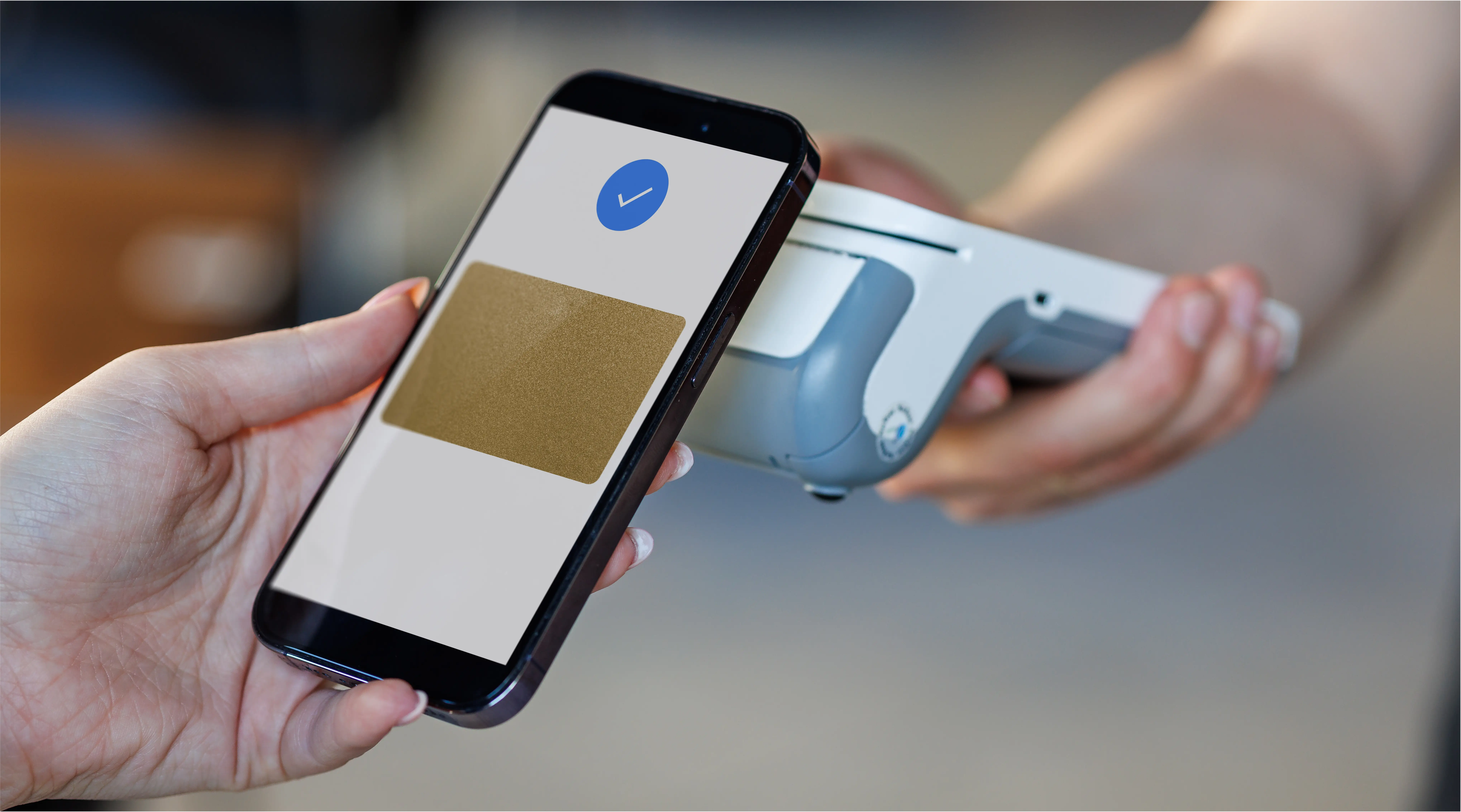
We can ask ourselves how this small object managed to make such a big place in our daily lives.
In reality, it is a technological gem that has many advantages.
It is normal to understand the use of a technology when it is recent. But the truth is this: the NFC technology is secure.
Here's why:
Although often compared, NFC and RFID (Radio Frequency Identification) have different uses.
Here it is Their main differences :
You are all familiar with Bluetooth. However, some still confuse it with NFC.
Here is how NFC technology differs from Bluetooth:
Most recent smartphones are equipped with NFC technology.
How to check?
All compatible phones can read a WEMET card instantly, without an app or configuration.
It is possible to program an NFC chip with applications like NFC Tools. You can:
WEMET est une worktech toulousaine qui vise à révolutionner les échanges professionnels. En 2020, son cofondateur Samuel Dassa part d’un constat :
les cartes de visite papiers ne sont pas pratiques et plus adaptées au monde du travail actuel.
Ainsi, est née la carte de visite connectée : la WeCard. Grâce à la technologie NFC, que l’on retrouve dans le paiement sans contact par exemple, elle vous permet d’échanger un large panel d’informations. La valeur clé chez WEMET c’est l’expérience utilisateur. Il était donc important pour nous de faire évoluer notre produit en innovant au quotidien mais également de vous garantir un produit qui évolue avec et tout au long de vos projets professionnels.

Première société à proposer la carte de visite connectée sur le marché français, WEMET compte aujourd’hui plus de 20 000 entreprises équipées, 200 000 utilisateurs de WeCards et plus de 10 collaborateurs.