Le Networker
.png)
À lire aussi
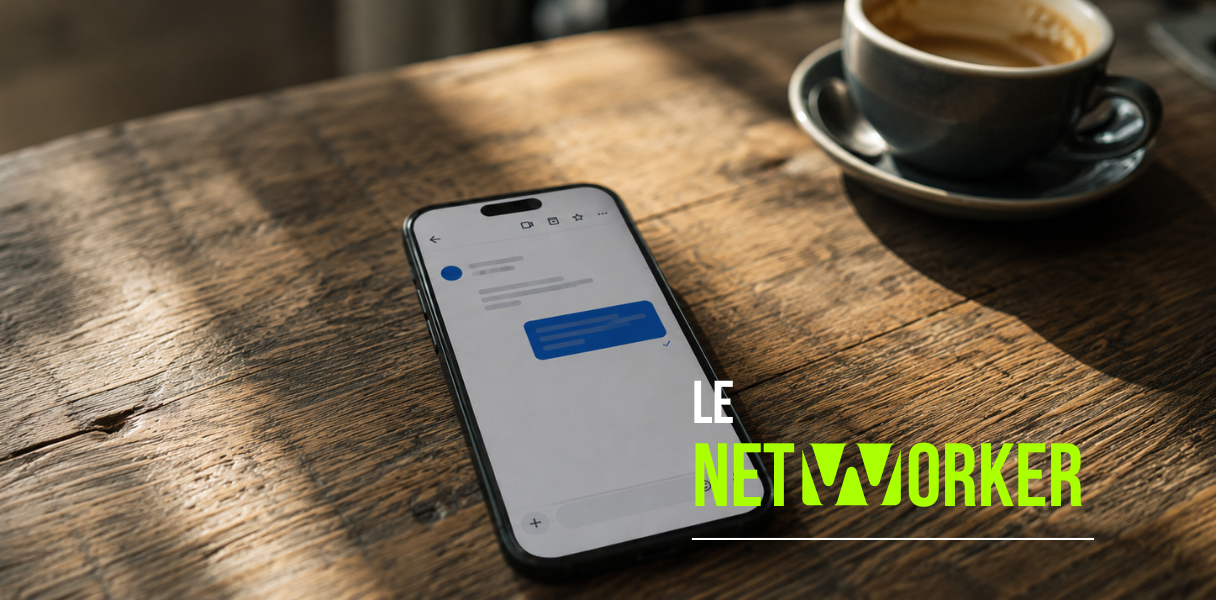
Dissecting 10 real messages: what works, what annoys, and why.

What are the functionalities of an NFC business card and how can they transform your professional exchanges?
The practical method for maximizing every event as a visitor

I'll spare you the cliché intro about 'trade shows being a fantastic opportunity.' You already know that. That's why you pay for your badge, catch the 6:47 AM train, and come home in the evening with aching legs and a stack of business cards you'll never read.
What I'm going to tell you is how not to come home empty-handed. Not with a booth. Not with a budget. Just with a method.
Most people 'prepare' for a trade show by looking at the exhibitor map on the train. That's too late.
LinkedIn message template
« I'll be at VivaTech on Tuesday. I see you'll be there too, according to the program. How about 15 minutes standing between two talks? I'm working on [topic relevant to them]. No pitch, just a chat. »
Response rate far exceeding the usual average. Because everyone is "in trade show mode" and thus in an open mindset.
On-site, you have 8 hours. That's a long time. That's a short time. It depends on what you make of it.
"I've seen people hand out 200 business cards in a day. I've seen others have 8 conversations and leave with 8 genuine leads. Guess which ones signed deals within three months."
This is also where it all counts.
You get home exhausted. Messages are waiting. A report is due. The event was yesterday. And yet.
Follow up with each contact. One by one. A LinkedIn message, not a copy-paste, but a genuine message referencing a detail from your conversation.
Example follow-up message:
« We discussed your recruitment challenge for technical profiles; I'm sending you the article I mentioned. »
That's what makes the difference. Not the « pleasure to have connected ».
For warm leads, the 2 or 3 who said « yes, let's reconnect », propose a specific time slot. Not just « let's talk again ». A date, a time, a duration.
Keep track of all the others. Not to spam them. But to have a legitimate reason to reach out in 6 weeks: an article, an introduction to make, a shared event.
Networking is nurtured between events, not just during them.
Have an event coming up this summer or in the fall?
Tell us which one, and we'll help you prepare your shortlist.