Marketing and sales

À lire aussi
The printing price is just the tip of the iceberg: 7 hidden costs that drive up the real bill for your business cards.
.png)
Marketplace, Waalaxy integration, offline AI scanner, badge folders, multilingual app... WEMET is opening up to your ecosystem this month. Discover all the new features and our tips for getting the most out of them.
This guide helps you choose the ideal dimensions for your business cards: standard sizes, creative options, and best practices for a successful design in 2026.

Even in the digital age, the business card remains an essential communication tool for Business and professionals, creating an impacting and memorable first contact.
The standard size of a business card varies by region in the world. In France and Western Europe, the preferred format is 85 x 55 mm. However, other regions use different dimensions. For example, in the United States and Canada, the classic size is 88.9 x 50.8 mm, while in Eastern Europe and Russia, business cards are usually 90 x 50 mm in size.
The standard format (85 x 55 mm)
The standard 85 x 55 mm format is the most common in france and Europe. Comparable to a bank card, it is easy to store. This format rectangular is ideal for the majority of businesses, offering ample space for essential information. It is also used for digital business cards.
Les standards vary from country to country. Internationally, the format differs: 89 x 51 mm at canada/United States, 90 x 50 mm in russia. Choosing the right one waistline depending on your area of activity is essential.
A standard format is not necessarily ordinary. To stand out, explore our range of unique business cards and benefit from our creative advice!
In addition to the standard business card, numerous other dimensions are available for your business cards, all adapted to fit in a wallet or card holder:
The square business card:
With its unique format of 65 x 65 mm, it offers an excellent opportunity to highlight an image, logo or product visual. Perfectly suited to artistic and creative sectors, this distinctive card leaves a memorable impression.

The rounded corners business card:
Its modern style differentiates it from classic business cards, while maintaining the dimensions of a standard business card. Rounded corners are less likely to get damaged or bent, which extends the life of the card.

The slim business card
This business card format is more compact and narrow than other models. Measuring only 40 x 85mm, this miniature business card is very easy to store and stands out from other cards.

The folded business card
This unique format gives you twice as much space to express yourself. The interior is fully customizable and, once folded, the card maintains dimensions close to the standard format: 87 x 49 mm. In addition, the folded business card can take many forms, including original shapes, for even more creativity and visual impact.

The connected business card
Innovative and modern, the connected business card integrates technologies NFC and QR codes to provide an interactive experience. With a simple tap, your contacts can instantly access your digital information, website, social media profiles, and more. In addition to being practical and ecological, this smart business card strengthens your professional image and allows you to stand out effectively in an increasingly digital world.
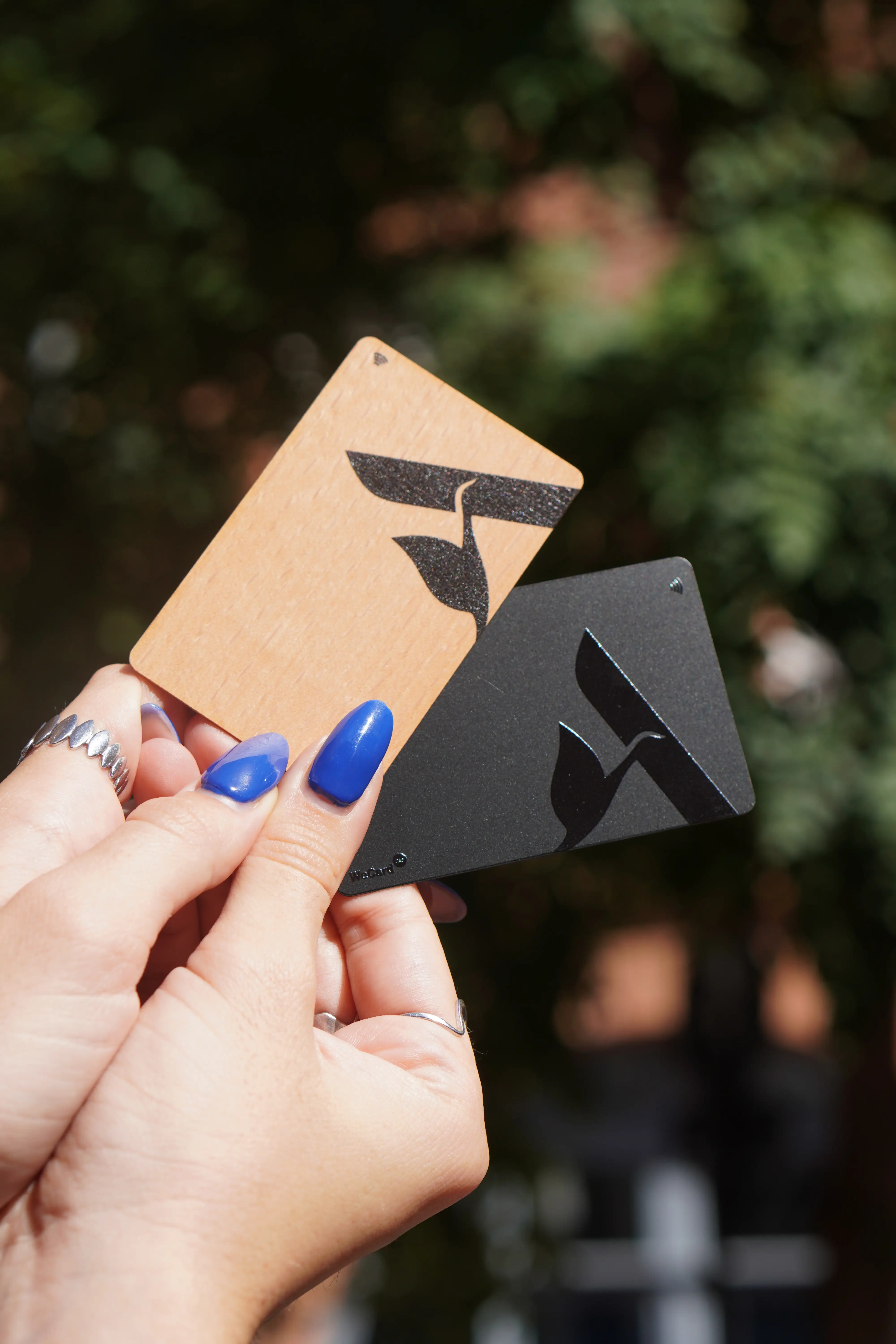
When it comes to business card sizes, the only limit is imagination. You can opt for round cards, hexagonal cards, or other unique shapes. However, it is important not to sacrifice practicality for originality. A business card that cannot be easily stored risks being quickly thrown away by your contacts.
Need help creating your business cards?
Our graphic designers are ready to assist you in the realization of your projects. Contact them to create a personalized business card that meets your specific needs.
To choose the optimal format for your business card, consider several technical and strategic factors when designing :
For an effective business card, choose information sparingly for clarity. Here are the items Indispensables to maximize your visibility :
Tips for optimizing the content of your business card:
Prioritize information by waistline and the weight of the characters. Leave empty spaces for a design airy and smooth reading. Don't overload; the card invites you to exchange.
For a unique and distinctive business card, you can opt for special finishes.
Classic finishes:
Eco-responsible finishes:

WEMET provides you with the checklist to avoid mistakes when creating your business card.

The digital business card is an innovative format that stores your information on a chip. NFC.
It allows you to share your contact details instantly and to access additional information (website, portfolio, etc.). It is one of braces the most versatile.
Benefits of the digital business card:
Choosing the right size is the first step in creating an impact business card. Heal design, information and finishes for a professional and memorable result.
The digital business card is an innovative alternative for businesses that care about the environment and their commercial efficiency.
WEMET est une worktech toulousaine qui vise à révolutionner les échanges professionnels. En 2020, son cofondateur Samuel Dassa part d’un constat :
les cartes de visite papiers ne sont pas pratiques et plus adaptées au monde du travail actuel.
Ainsi, est née la carte de visite connectée : la WeCard. Grâce à la technologie NFC, que l’on retrouve dans le paiement sans contact par exemple, elle vous permet d’échanger un large panel d’informations. La valeur clé chez WEMET c’est l’expérience utilisateur. Il était donc important pour nous de faire évoluer notre produit en innovant au quotidien mais également de vous garantir un produit qui évolue avec et tout au long de vos projets professionnels.

Première société à proposer la carte de visite connectée sur le marché français, WEMET compte aujourd’hui plus de 20 000 entreprises équipées, 200 000 utilisateurs de WeCards et plus de 10 collaborateurs.