Marketing and sales
À lire aussi
The printing price is just the tip of the iceberg: 7 hidden costs that drive up the real bill for your business cards.
.png)
Marketplace, Waalaxy integration, offline AI scanner, badge folders, multilingual app... WEMET is opening up to your ecosystem this month. Discover all the new features and our tips for getting the most out of them.
Every year, billions of business cards are exchanged, but an alarming statistic persists: 70% of contacts collected in salons or during appointments are never used. The loss of business opportunities is colossal, often due to tedious manual entry or the physical loss of paper. Learning to scan a business card with your phone then becomes a strategic necessity for any professional concerned about their performance. This technical guide details how to turn your smartphone into a powerful lead capture tool.

The transition to digital technology meets the requirements of productivity and data security. Keeping stacks of paper cards is an obsolete method that hampers commercial responsiveness.
Manually entering a card into a CRM takes an average of 2 to 3 minutes per contact. For a salesperson returning from a trade show with 50 cards, this represents more than 2 hours of administrative work. Using a solution for Business card scanner reduces this time to less than 10 seconds per profile. Over a year, the time savings amount to whole days, allowing teams to focus on selling rather than entering data.
The risk of losing or damaging a paper card is high. Once digitized, the information is secured in the cloud. Unlike the physical format, a digital contact cannot be lost in a pocket or drawer. Digitization ensures the total sustainability of data: even if you change your phone or lose your device, your database remains intact and recoverable.
Mobility is at the heart of modern business. By digitizing your cards, you transform inert physical stock into a dynamic database accessible via the cloud. Whether you are on the go or in the office, you have instant access to contact details (email, numbers, address) of your prospects. This immediate accessibility favors increased reactivity, a decisive criterion for transforming a lead into a customer.
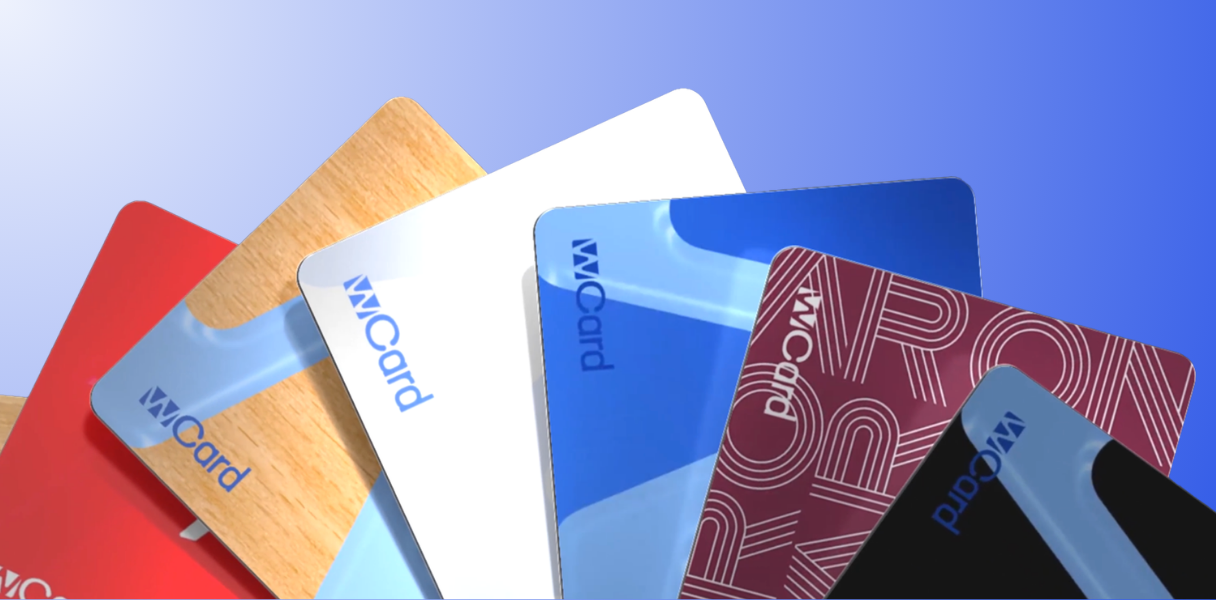
Dematerialization is part of a strong CSR approach. Adopting scanning also means reducing your carbon footprint by limiting the production and storage of unnecessary paper. WEMET embodies this ecological transition by offering not only digitization tools, but also sustainable physical media. The company is distinguished by the use of noble materials such as upcycled wood or Recycled PVC for its connected cards, all made in France.
Understanding the technology behind mobile scanning makes it possible to optimize its results and to guarantee data reliability close to 100%.
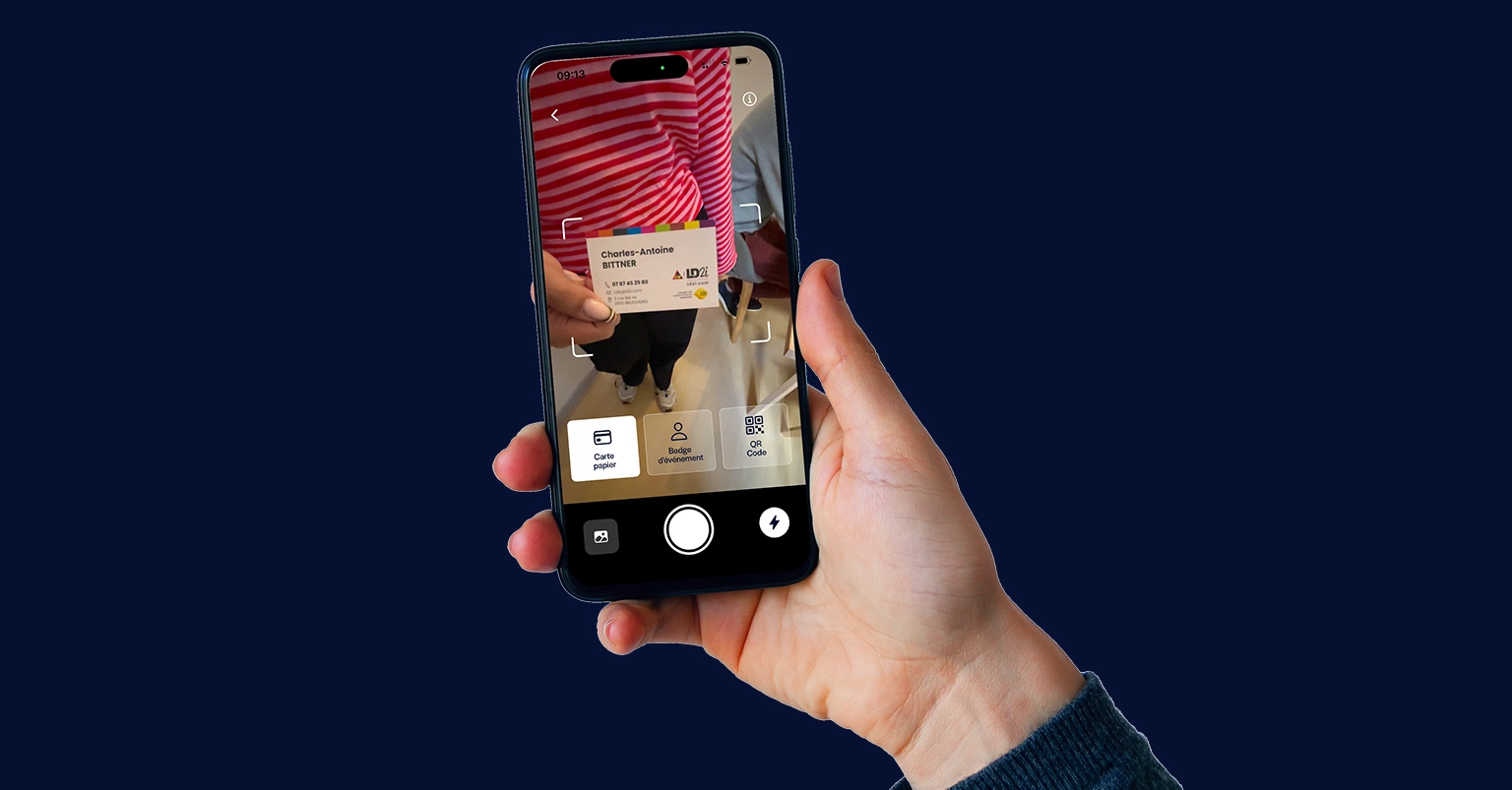
The principle is based on the use of the camera on your smartphone (Android or iOS) coupled with a dedicated application. The user positions the map, the application detects the edges, focuses, and captures a high definition image. Image processing algorithms then clean up the file before extracting the text data. This process involves several layers of complex software processing.
The keystone is OCR (Optical Character Recognition) technology. This process transforms the pixels of an image into coded characters (ASCII or Unicode). Modern OCR engines, assisted by artificial intelligence, are capable of:
A powerful scanning application understands the semantic context to place the right information in the right field (Name, Company, Position).
To obtain a usable result without manual retouching, follow this technical protocol:
The market for scanning applications is vast. Making the right choice depends on your volume of contacts and integration requirements.
For one use vocational, don't just rely on free. Evaluate solutions according to these parameters:
There are a multitude of tools, from giants like CamCard or Abbyy to Google Lens features. WEMET stands out as an innovative French solution. The WEMET application uses proprietary AI to enrich data, verify their validity, and structure information instantly, acting as a true augmented sales assistant.
Here is a quick comparison of the approaches:
For a detailed analysis, see our article on Top 5 best business card apps.
To maximize your ROI, choose a solution that centralizes everything. Opt for an “all-in-one” tool that allows you to scan, organize and share your own digital card. Also, make sure that the application is updated to support the latest versions of Android and iOS, ensuring the safety of your data.
Once the map is digitized, the value lies in the exploitation of the data. Dormant contact is useless contact.
The first step is local registration. The best solutions allow you to save the contact directly in the native address book (iPhone or Android) or in Outlook. This makes it possible to immediately identify the interlocutor during an incoming call. Look for the “Export to Contacts” feature to automate this action.
For sales teams, the data must go back to the central system. The native CRM integration offered by WEMET is a game changer: as soon as the scan is complete, the contact is sent to tools such as Salesforce, HubSpot or Pipedrive. This automation triggers workflows immediate and ensures that no lead falls through the cracks.
Beyond CRM, your digitized contacts can feed:
Interoperability via CSV files or APIs is a major technical criterion for streamlining your business processes.
The quantity of data collected requires careful organization. Transforming a list of names into an activatable network requires method.
Good management involves immediate categorization. Use tags as soon as you capture them: “Hot Prospect”, “Partner”, “Supplier”. This segmentation makes it possible to quickly find all the contacts for a specific event. The objective is to filter your base to launch targeted actions rather than generic communications.
Digitization is just the beginning. The lead management tools integrated into WEMET make it possible to optimize prospecting on a daily basis. You can add context notes, set automatic reminders, and qualify the level of interest using Lead Scoring. Your smartphone becomes a real commercial management tool to get back to the right person at the right time.
In a strict GDPR context, security is non-negotiable. When using an app to scan maps, make sure that the solution:
Confidentiality is a guarantee of trust for your interlocutors.
Knowing how to scan a business card effectively is the first step towards an effective networking strategy. By eliminating manual entry and securing your data, you save valuable time to focus on business.
WEMET is positioned as the complete French partner for this digital transition. By combining eco-responsible connected business cards, a powerful application equipped with AI and CRM integrations, we offer a 360° solution to digitize and exploit your professional exchanges. Don't let any opportunity pass you by: scan, sync, and turn every encounter into a success.
WEMET est une worktech toulousaine qui vise à révolutionner les échanges professionnels. En 2020, son cofondateur Samuel Dassa part d’un constat :
les cartes de visite papiers ne sont pas pratiques et plus adaptées au monde du travail actuel.
Ainsi, est née la carte de visite connectée : la WeCard. Grâce à la technologie NFC, que l’on retrouve dans le paiement sans contact par exemple, elle vous permet d’échanger un large panel d’informations. La valeur clé chez WEMET c’est l’expérience utilisateur. Il était donc important pour nous de faire évoluer notre produit en innovant au quotidien mais également de vous garantir un produit qui évolue avec et tout au long de vos projets professionnels.

Première société à proposer la carte de visite connectée sur le marché français, WEMET compte aujourd’hui plus de 20 000 entreprises équipées, 200 000 utilisateurs de WeCards et plus de 10 collaborateurs.